As the winter chill settles in, there’s nothing quite like the comforting warmth of a hearty beef stew simmering on the stove. The mere thought of tender beef, vibrant vegetables, and aromatic herbs mingling in a rich broth brings an instant sense of coziness to my kitchen. I can almost hear the gentle bubbling as it cooks, releasing tantalizing scents that wrap around me like a cozy blanket.
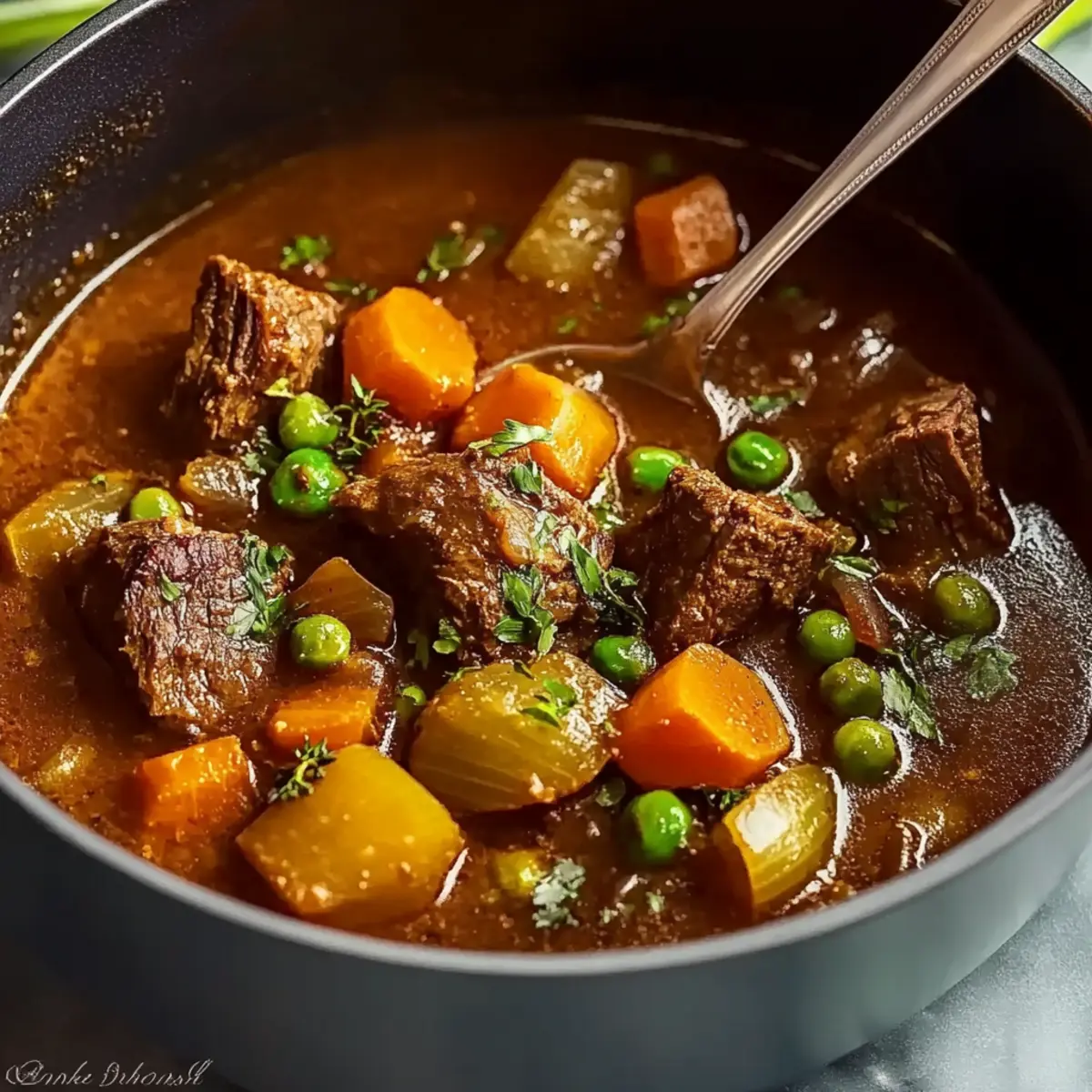
I first discovered this traditional beef stew recipe during a frigid evening when takeout just wouldn’t do. The satisfaction of creating a meal that nourishes both body and soul kept me coming back, and I never looked back. It’s a dish that begs to be shared, perfect for gatherings or a quiet evening at home, and trust me, its flavors improve with every spoonful.
With minimal effort and ingredients you likely already have on hand, you’ll find that this beef stew isn’t just easy to make; it’s also a wonderful way to welcome family and friends around your table. So, grab your Dutch oven, and let’s get started on this delicious journey together!
Why You'll Love This Beef Stew
- This Beef Stew is incredibly easy to prepare, making it perfect for both novice cooks and seasoned chefs alike.
- The comforting flavors of tender beef and hearty vegetables create a dish that’s not only delicious but also deeply satisfying on chilly days.
- Its versatility allows you to customize ingredients based on what you have on hand or your personal preferences, ensuring it fits any occasion.
- Visually, the vibrant colors of the vegetables and herbs create a stunning presentation that is sure to impress your family and friends.
Beef Stew Ingredients
Get ready for a cozy meal!
For the Stew Base
• 2 1/2 lbs beef chuck – Ideal for slow cooking, yielding tender, flavorful pieces.
• 3 tablespoons all-purpose flour – This helps in thickening the stew and adds depth to the flavor.
• 3 tablespoons olive oil – Use this for browning the beef to develop rich flavors.
For the Aromatics
• 1 large yellow onion – Provides a sweet, aromatic foundation that enhances the dish’s flavor.
• 4 cloves garlic – Fresh garlic adds a kick that brings out the beef stew’s heartiness.
• 2 tablespoons tomato paste – Contributes a rich umami taste and beautiful color to the stew.
For the Broth
• 1/2 cup red wine (optional) – Adds a lovely depth of flavor and can be substituted with more broth if desired.
• 4 cups beef broth – The base of your stew; homemade is best, but store-bought works well, too.
• 1 tablespoon Worcestershire sauce – Infuses a savory richness characteristic of great beef stew.
For the Herbs
• 1 teaspoon dried thyme – Adds an earthy aroma that complements the beef perfectly.
• 1/2 teaspoon dried rosemary – Brings a woodsy flavor, enhancing the overall taste.
• 2 bay leaves – Adds layers of flavor; don’t forget to remove them before serving!
For the Vegetables
• Salt and freshly ground black pepper – Season to taste for a well-balanced dish.
• 4 medium carrots – Sweet and colorful, they bring a lovely texture to the stew.
• 3 medium potatoes – Adds heartiness and makes the stew even more filling.
• 1 cup frozen peas – Added towards the end for a pop of color and freshness.
For Garnish
• Fresh thyme (optional) – A lovely touch for presentation, adding a hint of freshness right before serving.
This beef stew is sure to warm your heart and satisfy your cravings. Enjoy the process of bringing this delightful dish to life!
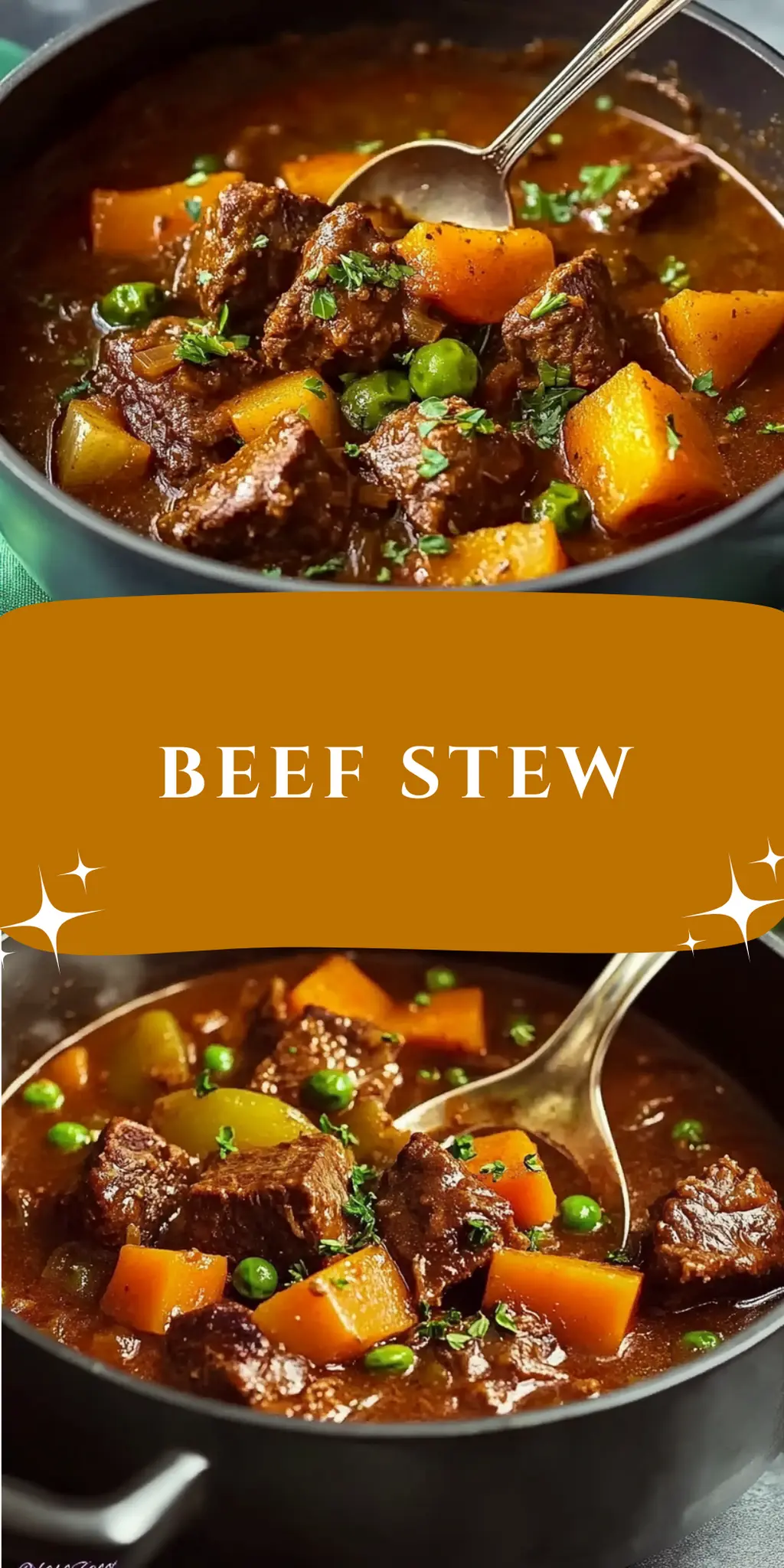
How to Make Beef Stew
-
Prepare the Beef: Pat the beef dry with paper towels, then season with salt and pepper. Dredge the beef cubes in flour to create a delicious crust when browned.
-
Brown the Meat: Heat 1 1/2 tablespoons of olive oil in a Dutch oven over medium-high heat. Brown half of the beef cubes until golden brown, then remove them and repeat with the remaining beef.
-
Sauté the Aromatics: Add the remaining olive oil to the pot and sauté the chopped onions until soft and translucent. Incorporate the minced garlic and tomato paste, cooking for 1-2 minutes to enhance the flavors.
-
Deglaze the Pot: Pour in the optional red wine, scraping the bottom of the pot to remove any browned bits. This adds depth to your beef stew! Return the beef to the pot along with the broth, Worcestershire sauce, herbs, bay leaves, salt, and pepper.
-
Simmer the Stew: Bring the pot to a gentle boil, then reduce the heat to low. Let it simmer partially covered for 1 1/2 hours; the beef will become tender and flavorful.
-
Add the Vegetables: Stir in the chopped carrots and cubed potatoes. Allow the stew to simmer uncovered for another 30-40 minutes, until the vegetables are tender and the flavors meld beautifully.
-
Finish with Peas: Add the frozen peas and let them cook for another 5-10 minutes. Remember to discard the bay leaves and adjust seasoning to your taste.
-
Serve and Enjoy: Ladle the warm beef stew into bowls and serve it hot with crusty bread or creamy mashed potatoes. Garnish with fresh thyme if desired for an extra touch of flavor.
Optional: Add a sprinkle of fresh parsley for a vibrant touch!
Exact quantities are listed in the recipe card below.
How to Store and Freeze Beef Stew
Fridge: Store leftover beef stew in an airtight container for up to 3 days. Allow it to cool before sealing to preserve freshness and flavor.
Freezer: Freeze beef stew in a freezer-safe container for up to 3 months. Make sure to leave space at the top for expansion as liquids freeze.
Reheating: Thaw frozen beef stew in the fridge overnight, then reheat on the stovetop over low heat or in the microwave until heated through. Add a splash of broth if needed for consistency.
Make Ahead Options
These Beef Stew preparations are perfect for meal prep enthusiasts! You can prepare the beef and vegetable components up to 24 hours ahead by browning the beef, sautéing the onions and garlic, and then combining them with the broth and seasonings. Simply refrigerate the mixture in an airtight container. When you’re ready to serve, bring the stew back to a simmer and add the carrots and potatoes, cooking until tender. This not only saves time but ensures the stew develops even richer flavors. Just remember to add the peas near the end to keep them fresh and vibrant! Enjoy a hearty, home-cooked meal with minimal effort!
What to Serve with Traditional Beef Stew?
As cozy aromas fill your kitchen, preparing a complete meal to accompany this hearty dish can elevate your dining experience.
-
Crusty Bread: Perfect for dipping, fresh crusty bread soaks up the rich broth, enhancing every bite.
-
Creamy Mashed Potatoes: The velvety texture of mashed potatoes creates a delightful contrast to the robust stew and adds heartiness to the meal. A drizzle of gravy over the top makes it even more irresistible.
-
Roasted Brussels Sprouts: These slightly crispy, caramelized veggies offer a lovely balance, bringing a slight bitterness that contrasts beautifully with the savory stew.
-
Simple Green Salad: A refreshing salad with mixed greens, cucumber, and a light vinaigrette cleanses the palate and adds a fresh element to the meal.
-
Sautéed Green Beans: Lightly seasoned green beans add a pleasant crunch and vibrant color while complementing the mellow flavors of the beef stew.
-
Red Wine: A glass of red wine pairs beautifully, deepening the flavors of the stew while creating a cozy dining atmosphere.
-
Apple Crisp: For dessert, a warm apple crisp with a scoop of vanilla ice cream is the perfect sweet ending to a comforting meal. The contrast of temperatures will delight your taste buds!
Beef Stew Variations
Feel free to mix things up and make this beef stew reflect your personal taste and pantry!
-
Herb Boost: Add fresh herbs like parsley or bay leaves at the end for an aromatic lift. Fresh herbs brighten the dish and add beautiful color!
-
Spice It Up: Toss in a pinch of red pepper flakes or a dash of cayenne for a warm kick. Just a little can take your savory stew to exciting new heights!
-
Vegetable Medley: Incorporate your favorite vegetables, such as mushrooms or green beans, to increase variety and nutrition. These add both flavor and texture, making the stew even heartier.
-
Gluten-Free: Swap the all-purpose flour for gluten-free flour or cornstarch to thicken the stew without the gluten. You can enjoy all the rich flavor without the worry!
-
Red Wine Substitute: If you’re avoiding alcohol, use extra broth, or a splash of grape juice mixed with vinegar for that robust depth. The stew will still achieve a full-bodied flavor.
-
Sweet Twist: Add a tablespoon of brown sugar or balsamic vinegar for a touch of sweetness that balances the savory notes beautifully. This can create an unexpected harmony you’ll love!
-
Slow Cooker Friendly: Simply brown your meat and toss everything in a slow cooker for 6-8 hours on low. Let it do the work while you enjoy the aroma throughout your home!
-
Creamy Variation: Stir in a dollop of sour cream or heavy cream at the end for a luxurious, creamy finish. This gives the stew a rich texture that feels indulgent and comforting.
Embrace these ideas and let your creative juices flow, transforming this beef stew into something uniquely yours!
Chef's Helpful Tips
- When making beef stew, always pat the beef dry before seasoning to ensure a good sear and enhance flavor.
- A common mistake is overcrowding the pot when browning; work in batches to achieve that beautiful, caramelized crust.
- Instead of just tossing in the ingredients, take the time to deglaze the pot after browning the meat, as this builds a depth of flavor that really elevates your beef stew.
- For the best texture, add hearty vegetables like potatoes and carrots halfway through the cooking process, keeping them tender but not mushy.
Traditional Beef Stew Recipe FAQs
How do I choose the right beef for my stew?
Absolutely! When selecting beef chuck, look for a piece that’s well-marbled with fat, as this will yield tender, flavorful meat after slow cooking. Avoid any beef with excessive dark spots or an unpleasant odor. Freshness is key for a delicious stew!
What is the best way to store leftover beef stew?
You can store leftover beef stew in an airtight container in the refrigerator for up to 3 days. Allow it to cool completely before sealing it to make sure it stays fresh and flavorsome. Be sure to label it with the date for easy reference.
Can I freeze beef stew, and how do I do it?
Yes, you can freeze beef stew! Simply transfer it into a freezer-safe container, leaving about an inch of space at the top to allow for expansion as it freezes. It will stay good for up to 3 months. When you’re ready to enjoy it again, thaw it overnight in the fridge and reheat on low, adding a splash of broth if the consistency has thickened.
What should I do if my beef stew is too thick?
If your beef stew turns out too thick, no worries! Gradually stir in a bit of beef broth or water until it reaches your desired consistency. Heat it over low on the stovetop while stirring to ensure an even distribution.
Are there any dietary considerations I should keep in mind?
Very! If you’re cooking for someone with food allergies, make sure to check for specific ingredients, especially the Worcestershire sauce which may contain anchovies or gluten. For a gluten-free version, substitute with a gluten-free flour and use a gluten-free broth. And if pets are around, avoid sharing the stew as some of the ingredients like onions can be harmful to them.
Beef Stew
Ingredients
Equipment
Method
- Pat the beef dry with paper towels, season with salt and pepper, and dredge in flour.
- Heat olive oil in a Dutch oven and brown the beef cubes, removing them halfway through.
- Sauté chopped onions until soft, then add garlic and tomato paste, cooking for 1-2 minutes.
- Deglaze the pot with red wine, scraping the bottom, then return the beef, broth, Worcestershire sauce, herbs, and seasonings.
- Bring to a boil, then reduce heat to low and simmer covered for 1.5 hours.
- Add carrots and potatoes; simmer uncovered for another 30-40 minutes.
- Stir in peas, cook for 5-10 minutes, remove bay leaves, and adjust seasoning.
- Ladle the stew into bowls and serve hot, garnished with thyme if desired.